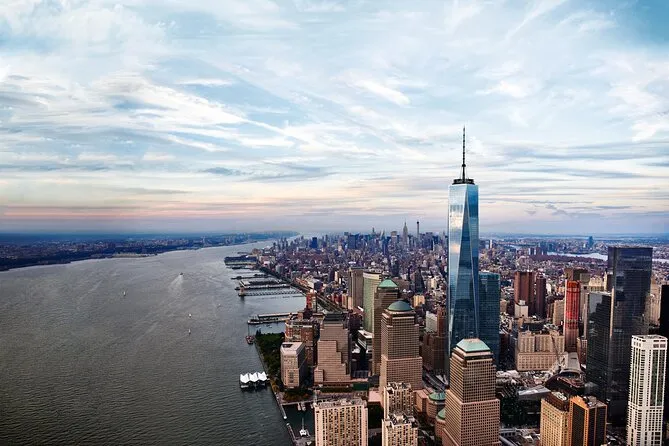
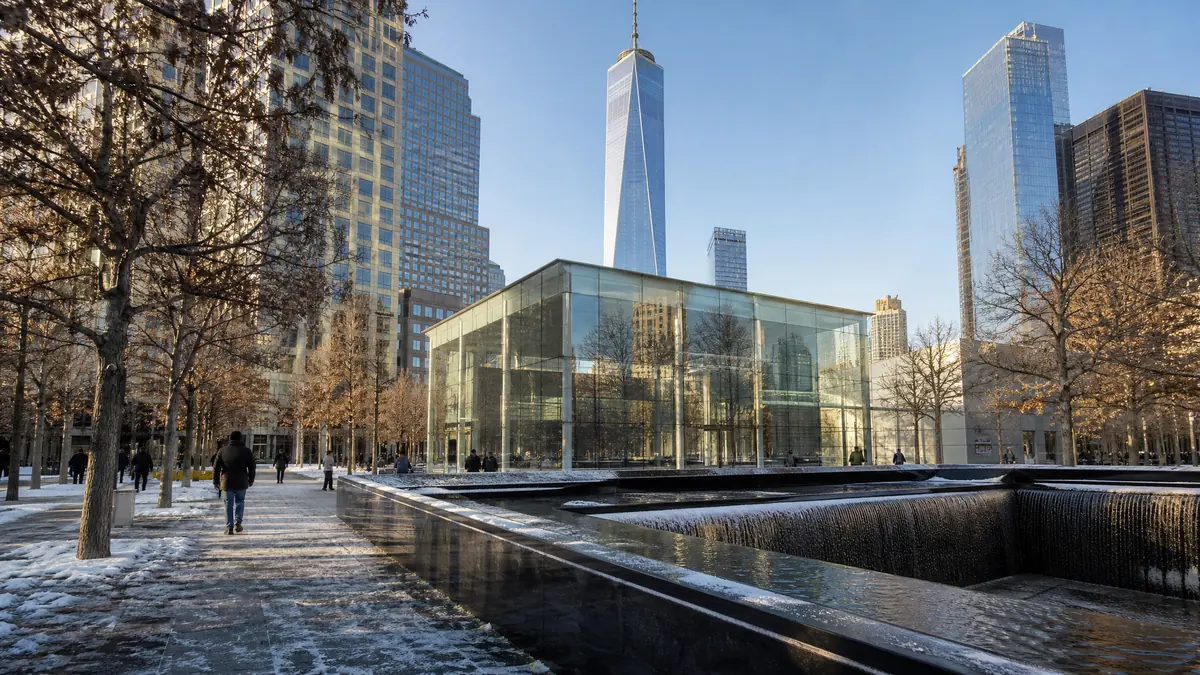
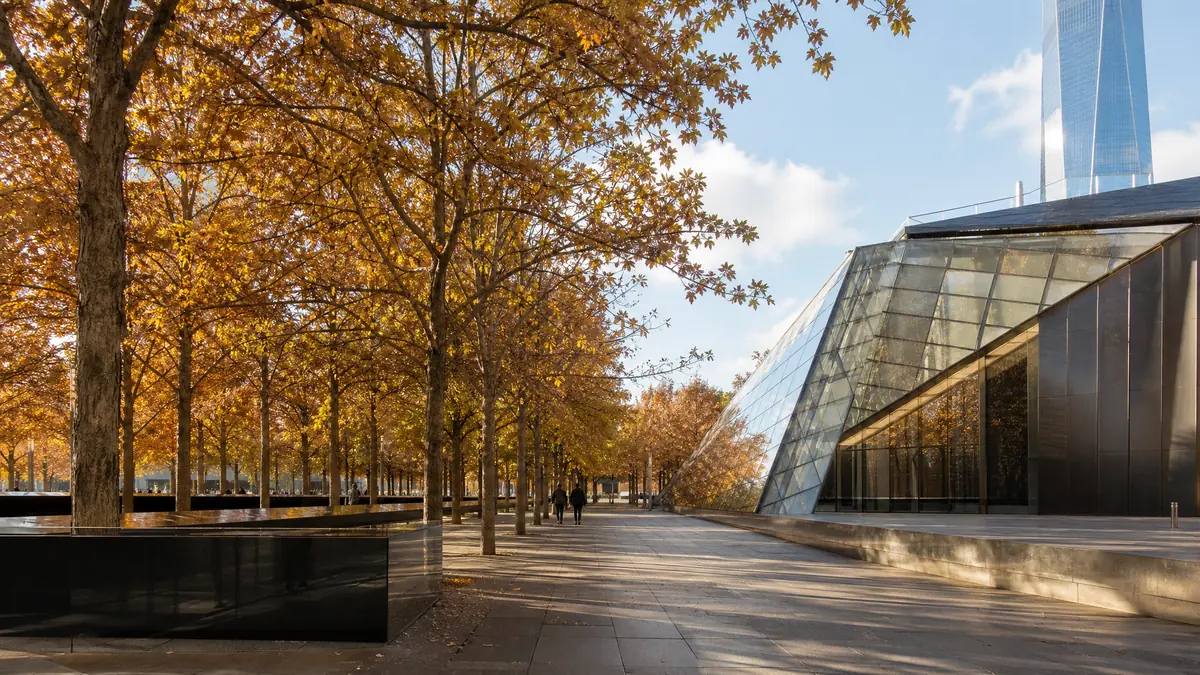
The World Trade Center site in Lower Manhattan, where two pools now fill the Twin
Towers' footprints. Walk it with a local guide who has a personal connection to 9/11, read the 2,983 names, then
look out from One World Observatory.
Free vs paid, spelled outWhich tickets include the Museum, and which do not
Real guest ratingsLive Viator & Tripadvisor figures
Free cancellationUp to 24 hours before, on every tour here
Secure checkout on ViatorBooked through Viator, no account needed
Tours & tickets
Choose your Ground Zero tour
In the centre, the All Access 9/11 Experience: the guided walk, the Museum and the Observatory in
one booking. Beside it, the same walk on its own and the Museum's official ticket for a self-guided visit. Every card opens a full tour page.
A small-group walk past St. Paul's Chapel, the FDNY Wall, the Survivor Tree and the pools, led by a New Yorker. Museum entry is an optional upgrade you choose at checkout.
What's included
Guided walk of Ground Zero with a guide who has a personal connection to 9/11
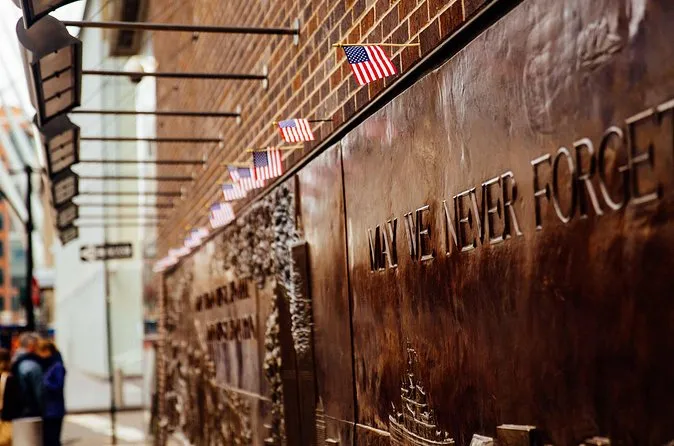
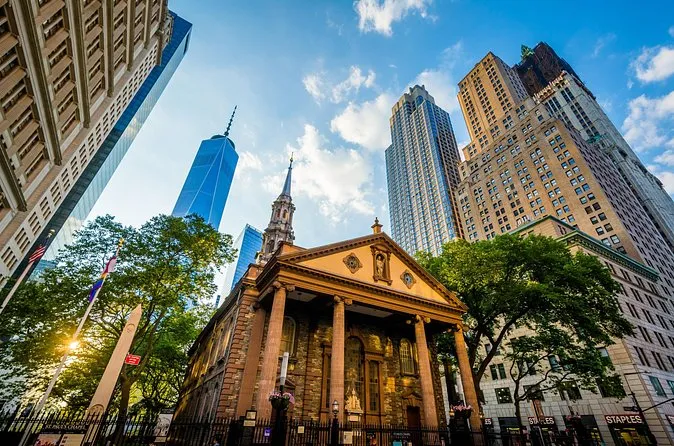
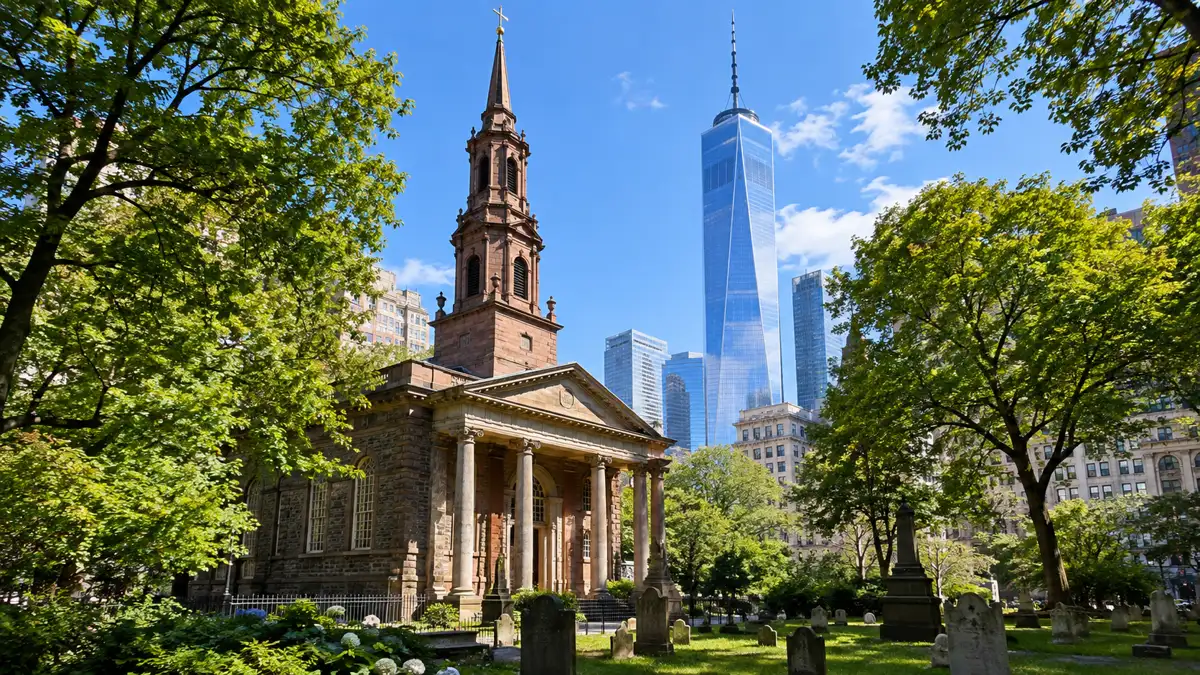
St. Paul's Chapel (outside), FDNY Memorial Wall and Ten House, Survivor Tree, Memorial pools
Small group: a maximum of 15 travelers
9/11 Museum entry only if you add the upgrade (self-guided or docent-led)
Not included: gratuities; children 3 and under free
A guide with a personal connection to 9/11 leads the Ground Zero walk. Then skip-the-line entry to the 9/11 Museum and One World Observatory, both at your own pace.
What's included
Guided Ground Zero walk: the Oculus, FDNY Memorial Wall, Survivor Tree and the Memorial pools
A local guide who shares a personal connection to 9/11
Skip-the-line timed entry to the 9/11 Museum (self-guided; a docent-led VIP option is available)
Timed entry to One World Observatory, stay as long as you like
Not included: gratuities; free cancellation up to 24 hours before
The museum's own timed ticket, sold by the National September 11 Memorial & Museum. Explore beneath the plaza at your own pace; audio guides and guided tours cost extra.
What's included
Timed admission to the 9/11 Memorial Museum, sold by the museum itself
Stay as long as you like once inside; no re-entry after you leave
Guided tour and audio guide available as paid extras
The outdoor Memorial pools are free and need no ticket
Not included: food and drinks, transport; free cancellation up to 24 hours before
The headline prices are not like for like. The $24 to $32 walks end at the Museum door; the All
Access price already includes the Museum and the Observatory. Check what is inside before you compare.
The outdoor Memorial is free for everyone. At the Museum, children 6 and under go free
and youth tickets (7 to 12) are $24. On the ExperienceFirst walks, children 3 and under go free. Every tour here
cancels free up to 24 hours ahead.
What is free, and what is not
The Memorial is free. The Museum and the stories are what you book.
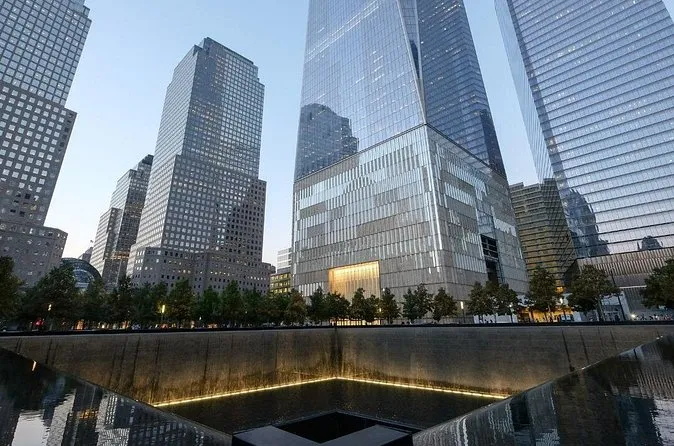
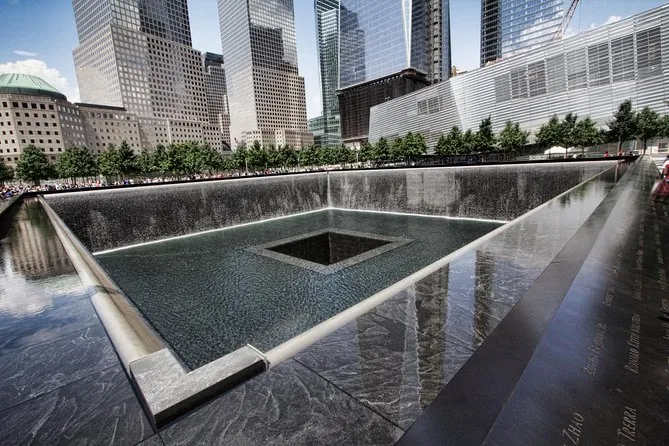
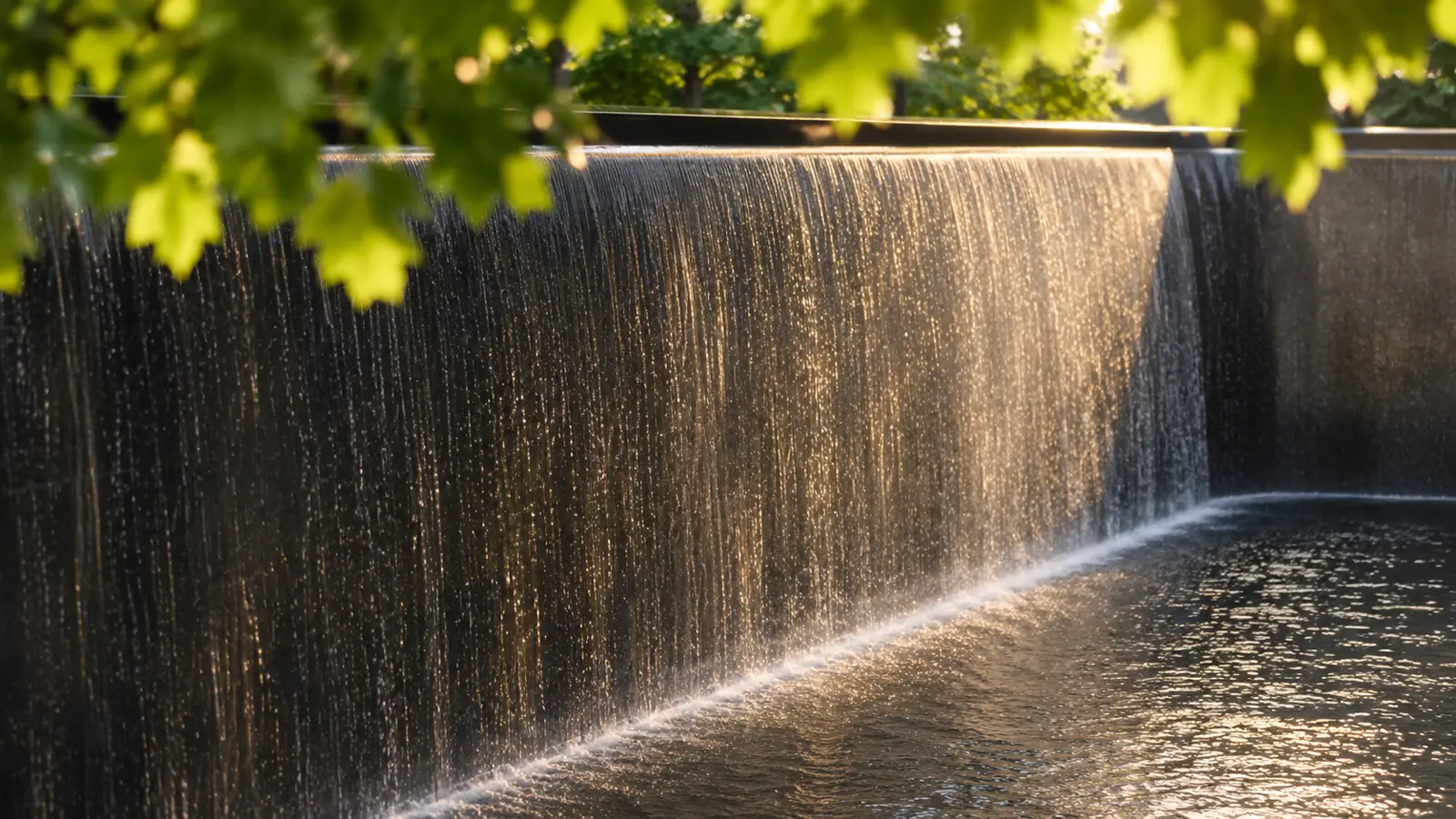
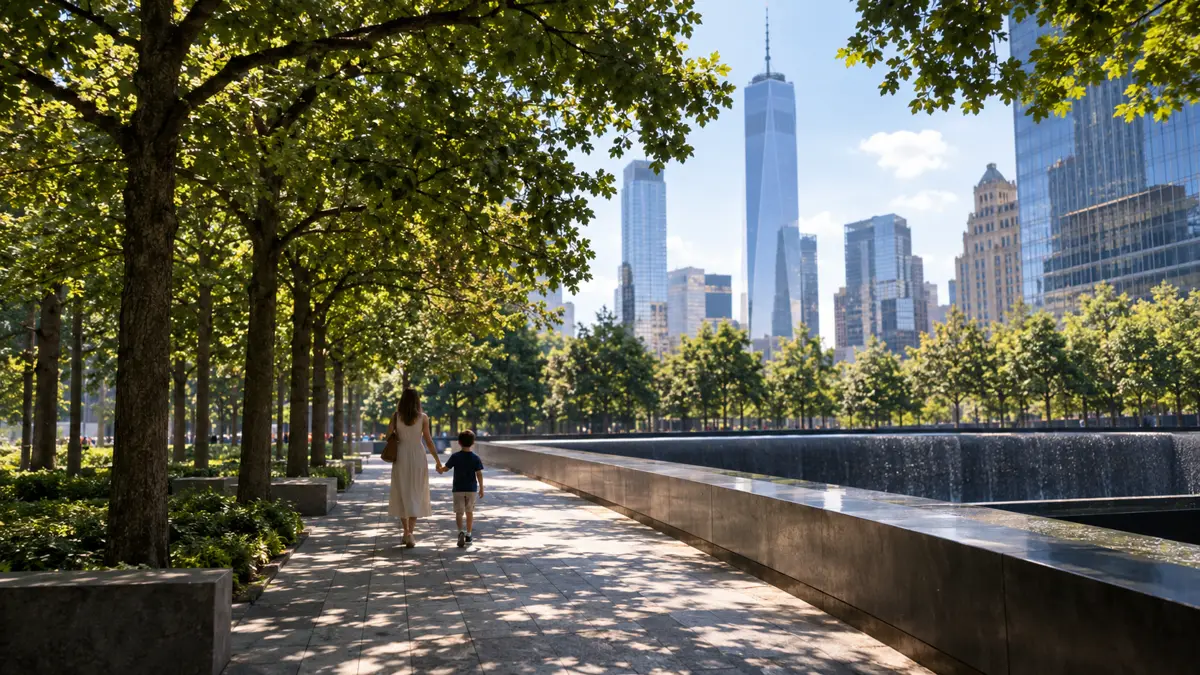
Ground Zero today is three things. The 9/11 Memorial is the open plaza with two reflecting pools
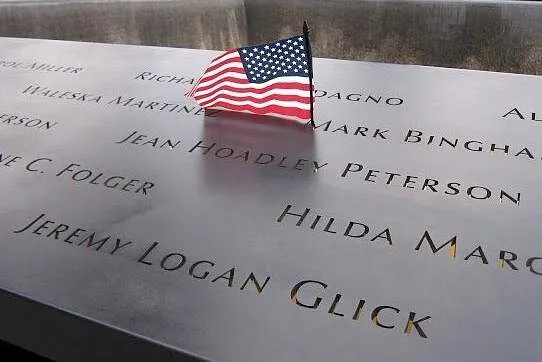
set in the footprints of the Twin Towers, the 2,983 names cut in bronze around them, and the Survivor Tree.
It is free, open daily from 8 a.m. to 8 p.m., and needs no ticket. The 9/11 Museum lies beneath the
plaza, down at the foundations of the towers, and is ticketed. One World Observatory, at the top of
One World Trade Center, is a separate paid attraction.
What does a tour add? A guide who ties the places around the plaza together: St. Paul's Chapel, where
recovery workers rested for months, the FDNY Memorial Wall, the Oculus. Guests on several walks mention guides
who were in New York that morning. If you only want to stand at the pools, you do not need to pay
anyone. To understand what you are looking at, book the guide.
2,983
Names around the two pools: the people killed on
September 11, 2001, and in the 1993 World Trade Center bombing.
Reflecting poolsSurvivor Tree9/11 MuseumOne World Observatory
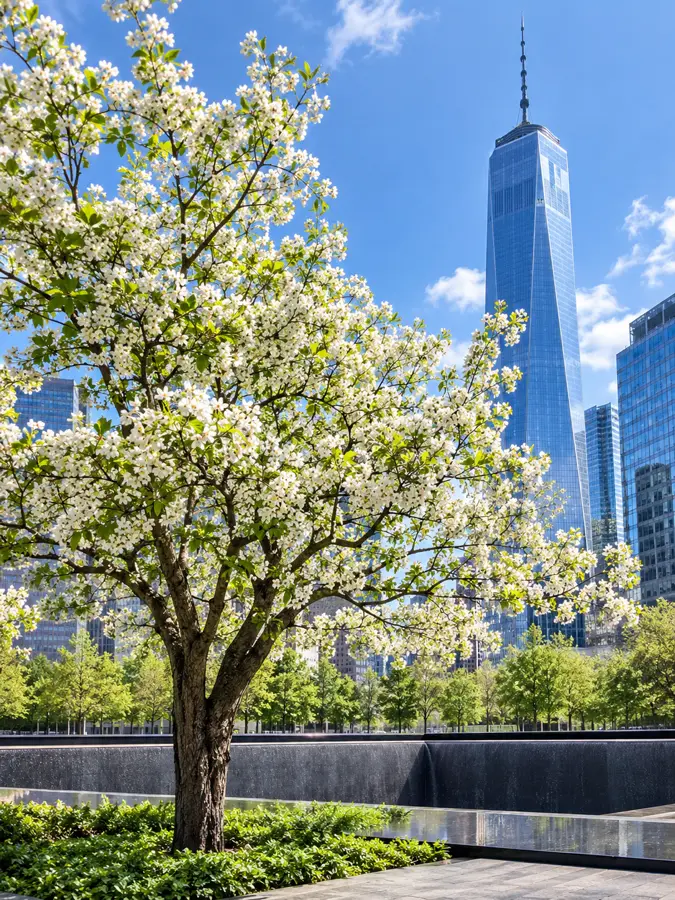
The Survivor Tree, a Callery pear found damaged at Ground Zero and nursed back to health.
01
Is the Museum on every tour?
No. The $24 to $32 walks end at the Museum door unless you add the upgrade.
02
When is the Museum closed?
Most Tuesdays. It opens Wednesday to Monday, 9 a.m. to 7 p.m.
03
Is it right for young kids?
The museum says its historical exhibition may not suit under-10s; the plaza suits everyone.
04
Who might skip the tour?
Anyone with an hour to spare who just wants to pause at the pools: that part is free.
The visit
How the All Access day unfolds
About five hours from the Oculus to the 102nd floor. The walk is guided; the Museum and the
Observatory are yours to take at your own pace.
01
Meet in the Oculus
Find the guide in the orange hat at the L'Arte del Gelato stand on the main level of the Oculus.
Arrive 15 minutes early
02
The Ground Zero walk
The FDNY Memorial Wall, the Survivor Tree and the pools, with the stories of the day and the rebuilding.
Guided
03
The 9/11 Museum
Skip-the-line timed entry, then the exhibitions beneath the plaza. The listing allows about two hours.
Self-guided
04
One World Observatory
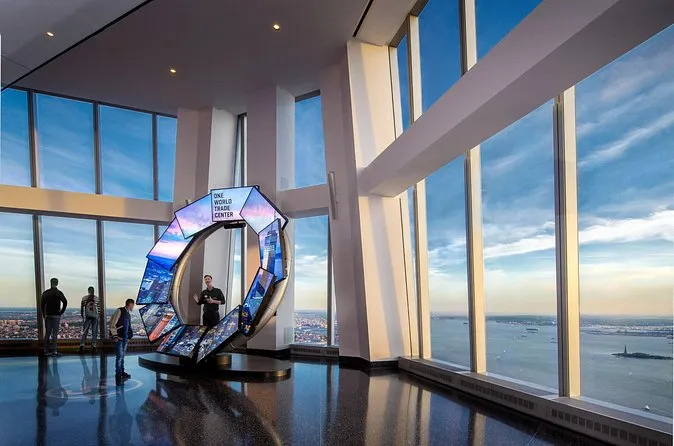
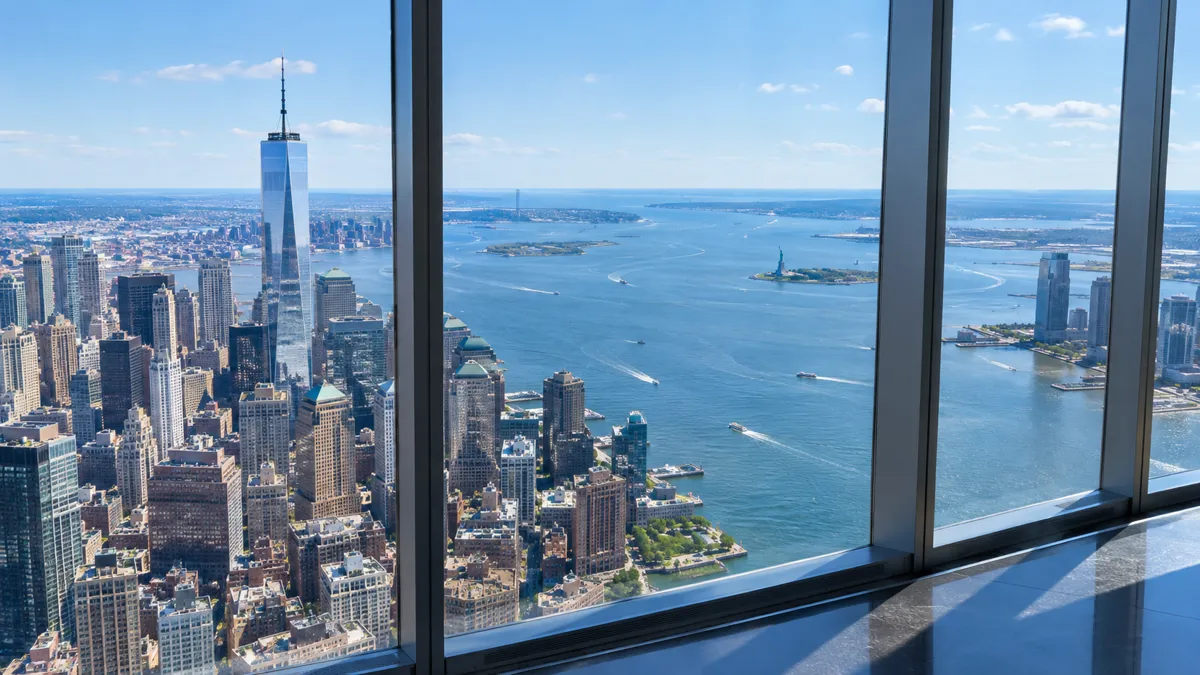
A timed entry and the lift to floors 100 to 102, for the view over the harbor and the city.
Getting there, tickets and ages, the security rules and what to bring: one tab each.
The Oculus (185 Greenwich St) is the World Trade Center transit hub and the meeting point for the All Access tour.
Subway: Fulton Street (2, 3, 4, 5, A, C, J, Z), WTC Cortlandt (1), World Trade Center (E) or Cortlandt St (R, W); PATH trains from New Jersey stop inside the Oculus.
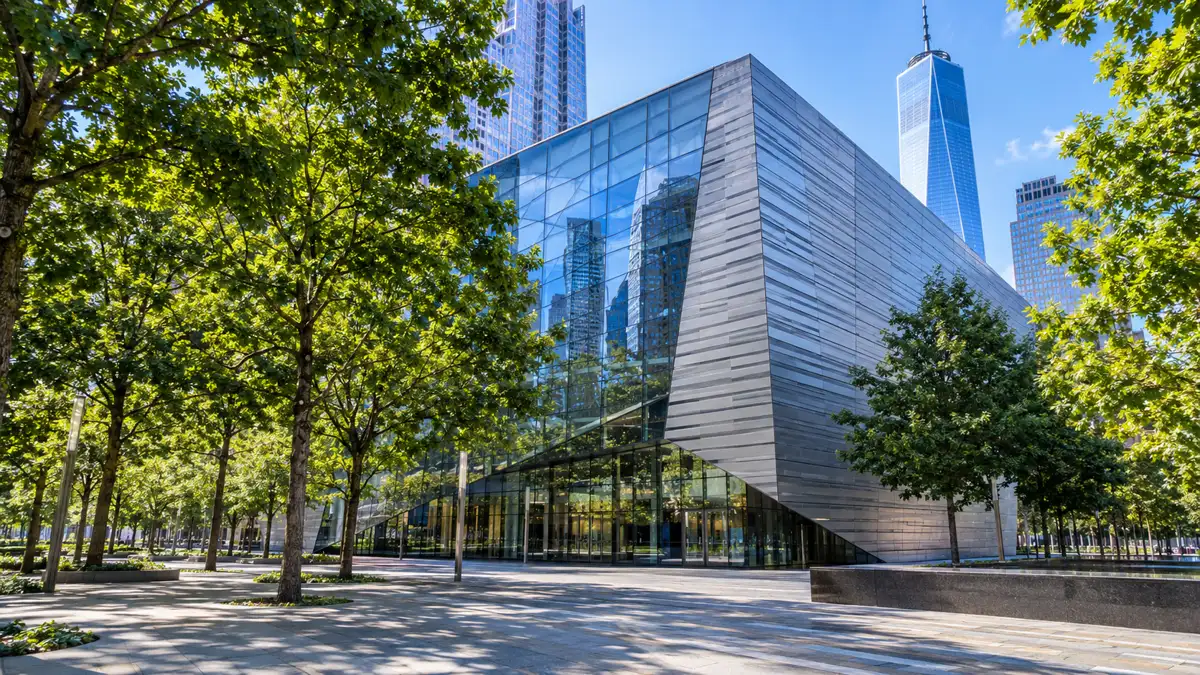
The Museum entrance is the glass pavilion between the two pools, at 180 Greenwich St.
Other operators meet at Broadway and Warren St or at 55 Church St: check your voucher.
Museum: adults 18 to 64 $36; seniors 65+ and young adults 13 to 17 $30; youth 7 to 12 $24; 6 and under free with a ticket.
ExperienceFirst tours (All Access and its sister walks): adults 13+, children 4 to 12 at a small discount, under-4s free.
Free Museum admission on Monday evenings, 5:30 to 7 p.m., with tickets released online at 7 a.m. that day.
9/11 family members, rescue and recovery workers, FDNY, NYPD and PAPD, and US military and veterans enter free with ID.
Airport-style security at the Museum; bags no larger than 19 x 17 x 8 inches.
Coat rooms store your belongings during the visit; no re-entry once you leave.
No flash photography anywhere in the Museum, and no photos in the historical exhibition.
No food or drink outside the cafe; nothing thrown or placed into the pools.
Jogging and oversize strollers are not allowed inside the Museum.
Manual wheelchairs and walkers are lent free, first come, first served, and one care partner enters free (Memorial & Museum accessibility).
Comfortable shoes: the walk is outdoors and the Museum is large.
Layers or a rain jacket: tours run rain or shine.
A small bag only, to keep security quick.
Your phone with the tickets: Museum and Observatory entries are timed.
Tissues. Many visitors find the Museum more emotional than they expected.
FreeMemorial poolsOpen daily 8 a.m. to 8 p.m., no ticket needed.
FreeSurvivor TreeThe pear tree that survived, on the plaza near the south pool.
FreeThe OculusSantiago Calatrava's white transit hall, the tour meeting point.
Ticketed9/11 MuseumWednesday to Monday, 9 a.m. to 7 p.m.; last entry 5:30 p.m.
TicketedOne World ObservatoryFloors 100 to 102, open daily 9 a.m. to 9 p.m.
GuidedThe storiesSt. Paul's Chapel, the FDNY Wall and the rebuilding, explained.
Where the tour starts
The Oculus meeting point
L'Arte del Gelato, inside the Oculus
185 Greenwich St, New York, NY 10007
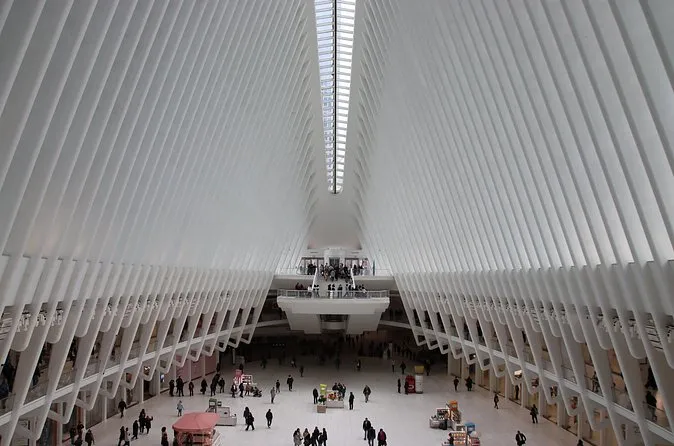
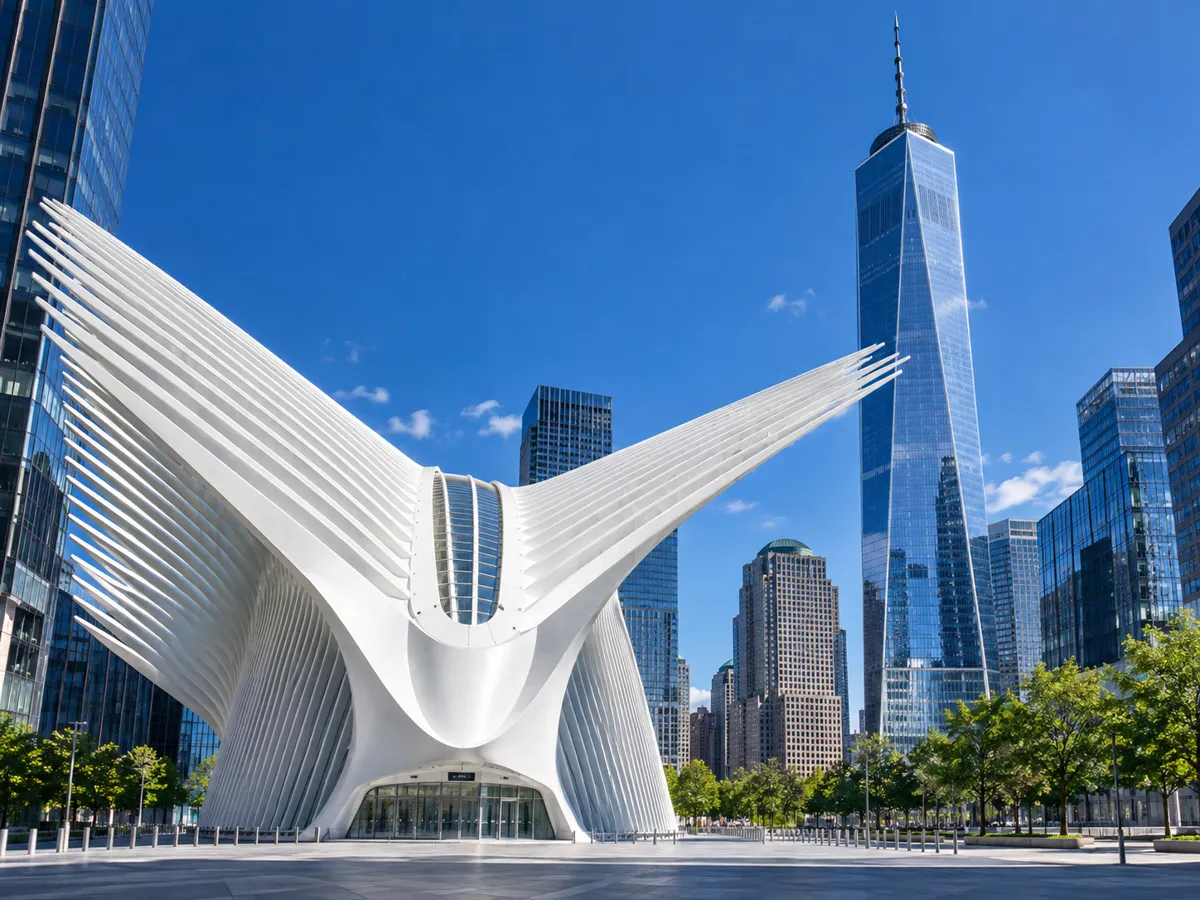
The All Access tour and the ExperienceFirst walks meet inside the Oculus, the white, wing-shaped
transit hall on the east side of the Memorial. Head for the L'Arte del Gelato stand on the main level and
look for a guide in an orange hat. Some guests found the Oculus confusing on a first visit, so give yourself
fifteen spare minutes. The walk ends at the Memorial, a few steps from the Museum entrance.
Inside the World Trade Center transit hub
Subway and PATH trains stop underneath
Step-free route; the ExperienceFirst and Experience NYC listings are marked wheelchair and stroller accessible
4.9★★★★★ 5,126 reviews · All Access 9/11 Experience live Viator & Tripadvisor figure
★★★★★
Our guide James did a fabulous job sharing all the information about 9/11. We felt he kept the group engaged throughout without it being overwhelming considering the very somber subject matter.
★★★★★
My guide, Maya, struck a nice balance between conveying the tragedy and solemnity of 9/11 and the hope for the future and enduring spirit of New York and the USA. Definitely recommend.
★★★★★
A very thought provoking, informative and well organised tour. The One World Observatory was well worth the visit and a light relief after the memorial and museum.
★★★★★
Still impactful and moving. Special kudos to all the volunteers who engage with the public and are super helpful. We had a wheelchair in our party and it is a very accessible space.
★★★★★
Amy, our guide was excellent bringing first hand knowledge to the tour in a sympathetic but very informative manner. Ground Zero was very moving. We were then able to walk round the museum at our own pace.
★★★★★
Our guide lives in lower Manhattan and was able to give a personal account of that morning. We learned about the symbolisms surrounding the Reflecting Pools, Freedom Tower, Survivor Tree and the Oculus.
★★★★★
Our family loved this tour! My husband & I recall 9/11 clearly, but our daughter wasn't yet born. It was very touching to walk the grounds & hear the stories from this ground zero perspective.
★★★★★
The museum is immense so the tour gave some structure that helped us navigate the exhibits and then added a lot of insights and stories that made it more meaningful.
★★★★★
It's a BIG day. Allow 4 hours minimum. [...] The 9/11 Museum is an odyssey. Brilliantly put together. Great experience.
See more of downtown
Add Wall Street and Lady Liberty
A broader morning in Lower Manhattan: the Financial District, a stop at the Memorial pools, Battery
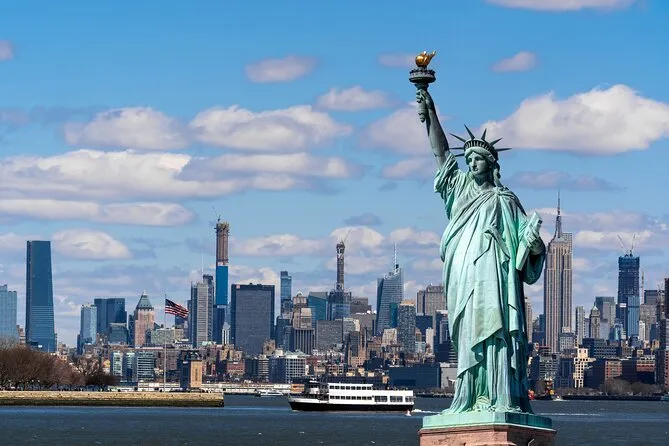
Park, and the option to carry on by ferry to the Statue of Liberty.
If you want Lower Manhattan as a whole rather than one long day at Ground Zero, this walk starts on Wall Street with Federal Hall, the Stock Exchange and Trinity Church, stops at the 9/11 Memorial pools, and ends at Battery Park. Add the upgrade and you continue by ferry to the Statue of Liberty and Ellis Island.
Ground Zero is one of the most visited places in New York, and one of the easiest to
get wrong. People pay for the part that is free, then rush the part that needs hours. This is what stands on
the site today, what a guide adds, and how to plan a day that does the place justice.
What you will find at Ground Zero today
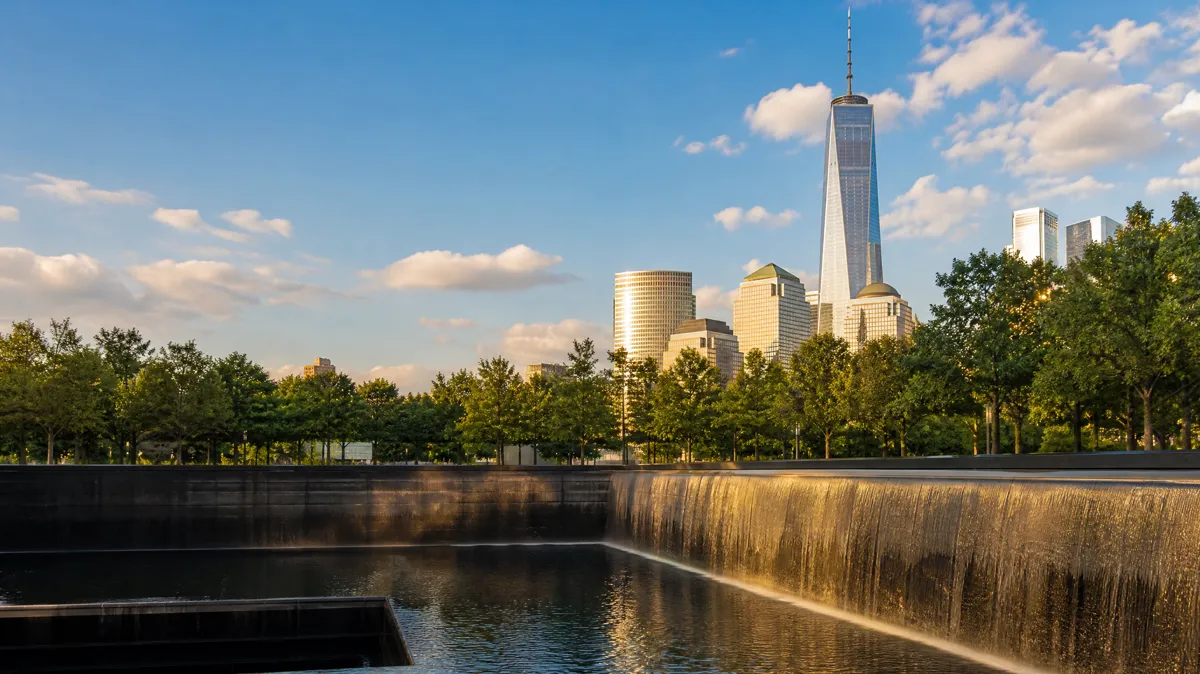
The sixteen acres where the World Trade Center stood are now a rebuilt neighborhood with a memorial at its
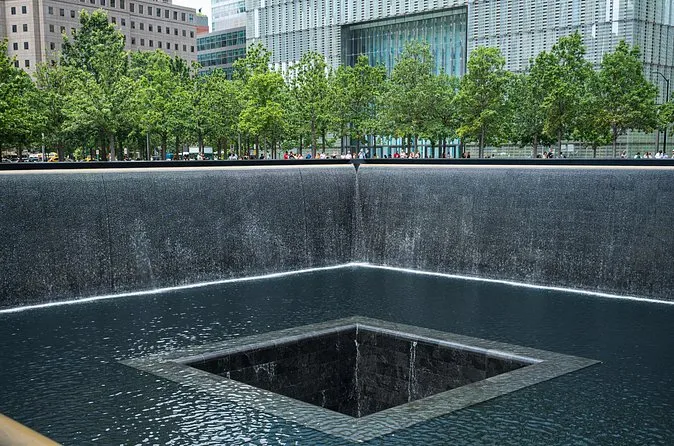
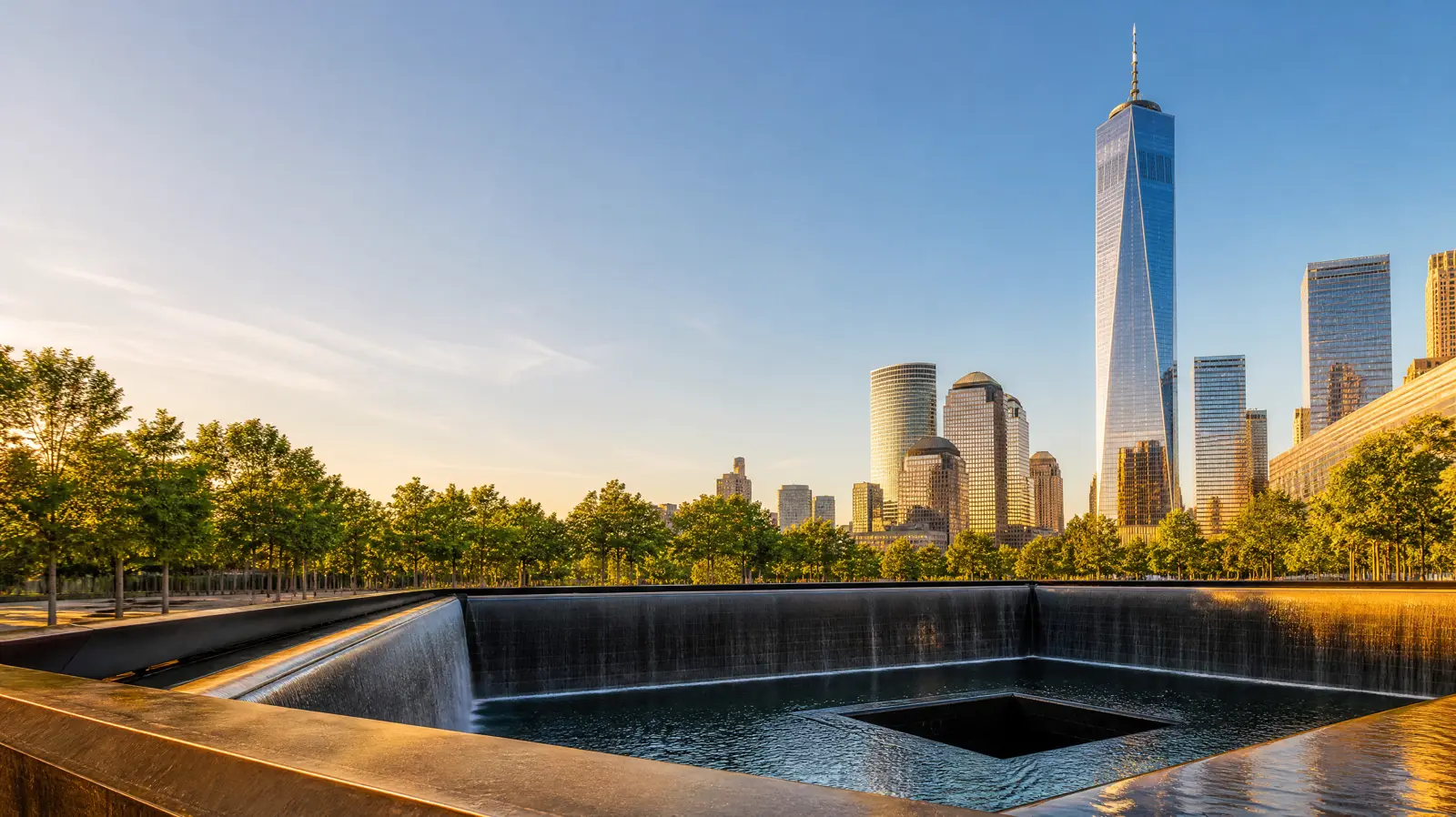
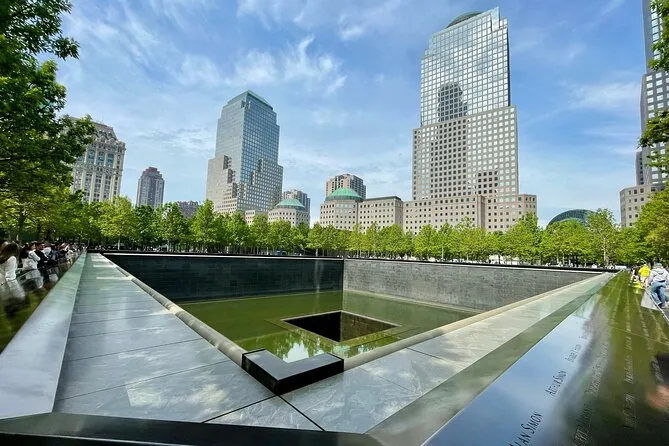
heart. The two reflecting pools, each nearly an acre, sit in the exact footprints of the North and South Towers.
Water falls thirty feet down their black granite walls and then a further twenty feet into a central void you
cannot see the bottom of; the designers, Michael Arad and Peter Walker, called it "Reflecting Absence". The
Memorial calls them the
largest man-made waterfalls in North America.
Around the edges, 2,983 names are cut into bronze: the 2,977 people killed on September 11, 2001, in New
York, at the Pentagon and near Shanksville, and the six killed in the 1993 bombing. They are arranged so that
colleagues, friends and flight crews sit together. Look for white roses. Staff place one at each name on that
person's birthday, every morning of the year.
Hundreds of swamp white oaks shade the plaza. Among them stands the Survivor Tree, a Callery pear found
burned and broken in the rubble, nursed back to health and replanted here. Near the pools, the Memorial Glade,
dedicated in 2019, honors the rescue and recovery workers and others who fell ill or died after exposure to the
toxins at the site.
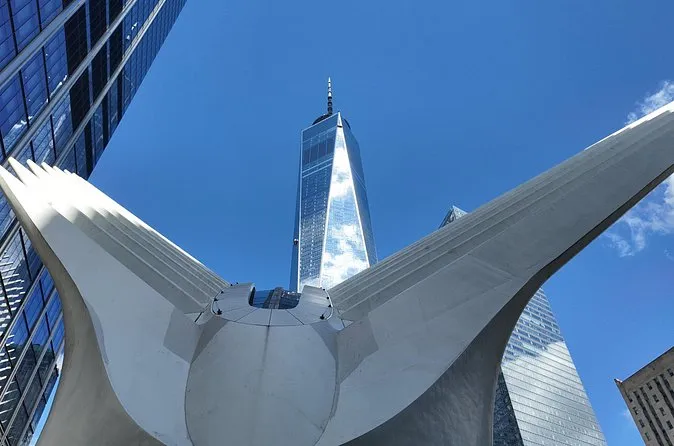
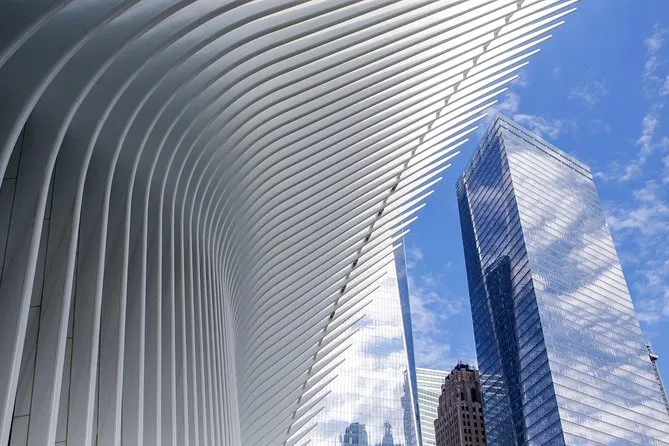
Look up and you see One World Trade Center, 1,776 feet tall; the white ribs of the Oculus, the transit hub
designed by Santiago Calatrava; and, a block east, St. Paul's Chapel, which survived the collapse untouched and
became a rest station for recovery workers for months afterwards.
The Oculus, where the All Access tour meets, beside One World Trade Center.
What a guide adds
You can walk the plaza on your own, any day from 8 a.m. to 8 p.m. Nobody checks a ticket. What you will
miss is the thread between the places: why the FDNY Memorial Wall stands beside the Ten House, where the
firefighters of Engine 10 and Ladder 10 were based; what happened inside St. Paul's in the months after; why the
names sit in the order they do.
The ExperienceFirst guides on the All Access day and its sister walks share a personal connection to 9/11,
and several guests write that their guide was in New York that morning. That is the part people remember.
The walk ends at the Museum door unless your ticket includes the Museum, so check which one you booked.
The honest small print: the most common complaints are about logistics, not the
content: groups that feel too large on the cheaper walks, a fast pace for anyone with bad knees, and the
Oculus meeting point being hard to find on a first visit. Arrive early, tell the guide if you need a slower pace,
and know that on the walk-only tours the Museum is not included unless you add it.
Inside the Museum
The Museum is larger and more emotional than most visitors expect. It sits seven stories below the plaza, at
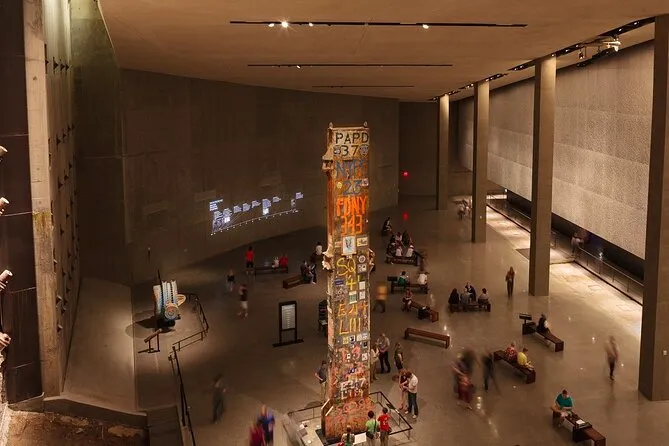
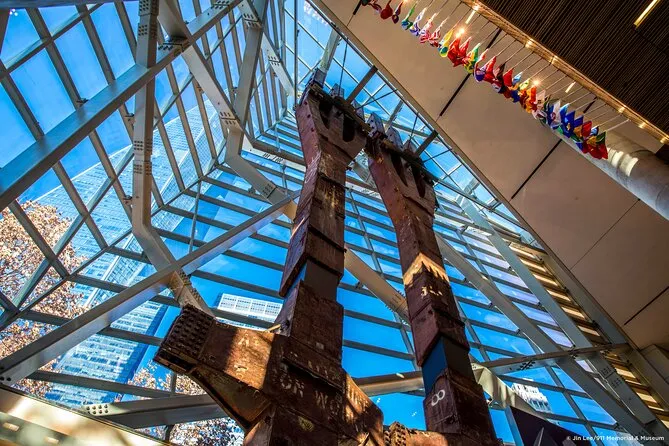
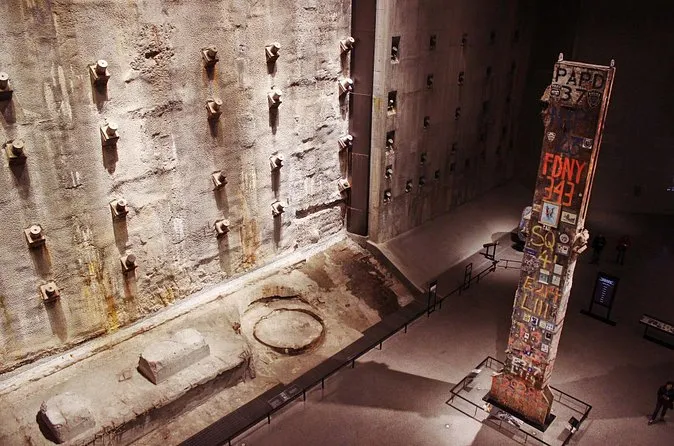
bedrock. You descend past the Survivors' Stairs and the steel tridents from the towers' facade into Foundation
Hall, where the original slurry wall still holds back the Hudson and the Last Column stands covered in the
messages of recovery workers.
The historical exhibition tells the story of the day minute by minute. Photography is not allowed there, and
the museum suggests it may not suit children under ten. Plan for two to three hours.
Foundation Hall, with the Last Column and the original slurry wall.
Planning a day that works
Book a morning start. The Museum is calmest early. Wear comfortable shoes, carry a small bag to speed through
security, and keep the Observatory for last: guests describe the view from the top as a welcome breath after the
Museum.
Skip Tuesdays, when the Museum is usually closed, and the anniversary itself, when the plaza is reserved for
families during the morning ceremony. If your group includes young children, do the walk and the plaza and leave
out the Museum's main exhibition.
Comfortable shoes, a layer and a small bag: all you need for the day.
Straight answers to what visitors ask most about Ground Zero, the 9/11 Memorial and the Museum.
Is the 9/11 Memorial free?
Yes. The outdoor Memorial, with the two reflecting pools and the names, is free and open daily from 8 a.m. to 8 p.m., with no ticket. The 9/11 Museum beneath the plaza is the part you pay for. Read Memorial vs Museum.
How much are 9/11 Museum tickets in 2026?
The museum charges $36 for adults (18 to 64), $30 for seniors 65+ and young adults 13 to 17, $24 for youth 7 to 12, and nothing for children 6 and under (they still need a ticket). Free tickets are released for Monday evenings, 5:30 to 7 p.m. See the 9/11 Museum ticket guide.
What does the All Access 9/11 Experience include?
A guided walk around Ground Zero with a guide who has a personal connection to 9/11 (the Oculus, the FDNY Memorial Wall, the Survivor Tree and the pools), then skip-the-line timed entry to the 9/11 Museum and to One World Observatory, both at your own pace. Gratuities are not included. See the tour.
How long do you need at Ground Zero?
Allow 30 to 60 minutes for the Memorial pools alone and two to three hours for the Museum; the museum itself suggests at least 45 to 90 minutes, but most guests on the tours here say they wanted more. The All Access day runs about five hours. See how long the 9/11 Museum takes.
Is a guided Ground Zero tour worth it?
For most first-time visitors, yes: several guests mention guides who were in New York on the day, and guests say the personal stories are what they remember. If you only want to stand at the pools, you can do that for free on your own. Compare the tours in best Ground Zero tours.
Is the 9/11 Museum appropriate for children?
The museum says its main historical exhibition may not be appropriate for children under 10, and leaves it to parents. The outdoor Memorial and the guided walks suit all ages. Read the 9/11 Museum with kids.
Can you take photos at the 9/11 Memorial and Museum?
Personal photos are fine on the Memorial plaza and in most of the museum, but never with a flash, and not inside the historical exhibition about September 11, 2001, or wherever signs say no. Nothing may be thrown into the pools.
Is there a free day at the 9/11 Museum?
Yes. Free tickets for Monday evenings (5:30 to 7 p.m.) are released online from 7 a.m. that Monday, first come, first served, four per person. New Yorkers also get New York First Sundays, and 9/11 family members, rescue and recovery workers and US veterans and military enter free.
Where do the Ground Zero tours meet?
The All Access tour and its sister walks meet inside the Oculus, the white transit hub at 185 Greenwich Street, at the L'Arte del Gelato stand on the main level; the guide wears an orange hat. Other operators meet at Broadway and Warren Street or at 55 Church Street, so check your voucher.
What can't you bring into the 9/11 Museum?
Bags larger than 19 x 17 x 8 inches, large or jogging strollers, food and drink outside the cafe, and anything that fails the airport-style security screening. Coat rooms store belongings for the length of your visit, and there is no re-entry once you leave.
Can you visit Ground Zero on September 11?
Not in the usual way: on the anniversary the Memorial plaza is reserved for victims' families during the morning ceremony and reopens to the public in the evening, and museum hours change around the date. Plan your tour for another day if you can.
Can I cancel a Ground Zero tour?
Yes. Every tour on this page cancels for a full refund up to 24 hours before the start. On the All Access day, the museum and observatory slots are timed, so arrive on time: they cannot be moved on the day.
Ready to book
Choose the visit that fits your day.
Free cancellation up to 24 hours before on every tour below.

 Most reviewed
★ 4.8Up to 4 hoursFree cancellation